
Power and the Limits of Imperial Rule
Quo VadisThis thread contrasts Nero’s coercive sovereignty with a spiritual authority that spreads through witness, mercy, and communal commitment.
increasing Bearing strength in each event
 decreasing
Bearing strength in each eventdecreasingThe Emperor’s Claim

The Emperor’s Claim
Authority over bodies
Nero treats Lygia’s hostage status as sufficient reason to move her without regard for her wishes.
A fragile absolute
Aulus and Pomponia must yield to imperial force, although their moral authority is stronger than Nero’s household’s.
A Higher Allegiance

A Higher Allegiance
A different sovereignty
Peter teaches that God, not Nero, rules the world. His claim redirects loyalty from emperor to divine truth.
Power measured by conduct
Christian authority appears in forgiveness, patience, and care for the vulnerable rather than threats or armies.
The Emperor’s Scapegoat
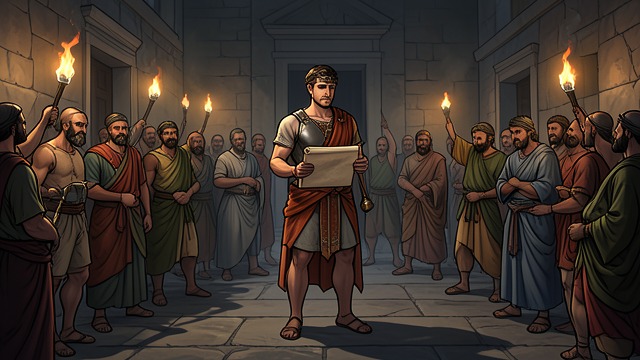
The Emperor’s Scapegoat
State violence deployed
Nero uses accusations against Christians to protect his reputation and stage punishments as justice.
Authority loses credibility
The brutality of repression undermines the moral legitimacy the emperor seeks to display.
A Crowd Restrains Nero
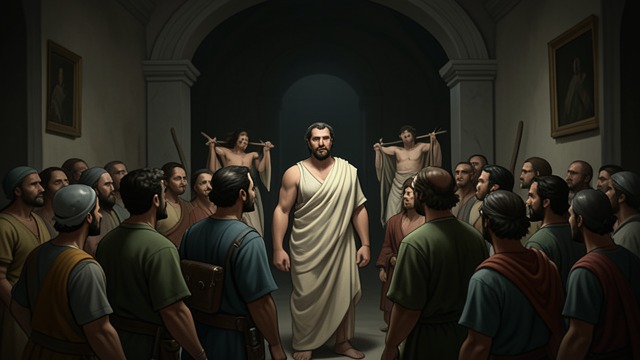
A Crowd Restrains Nero
Popular demand
The spectators insist that Lygia and Ursus be spared, and powerful courtiers join the appeal.
Sovereignty constrained
Nero yields to avoid a dangerous public confrontation, showing that his rule depends on other people’s consent and fear.
The Living Truth Endures

The Living Truth Endures
A movement survives violence
Executions fail to silence Christian teaching; survivors continue gathering and new converts arrive.
A long victory imagined
Peter understands that imperial rulers pass while the community’s moral influence continues to grow.
When Lygia is summoned from the Plautius household
During Peter’s teaching at Ostrianum
After the Great Fire
After Ursus rescues Lygia in the arena
After the executions and Peter’s return to Rome
